St. Augustine’s Spanish Colonial Period Begins
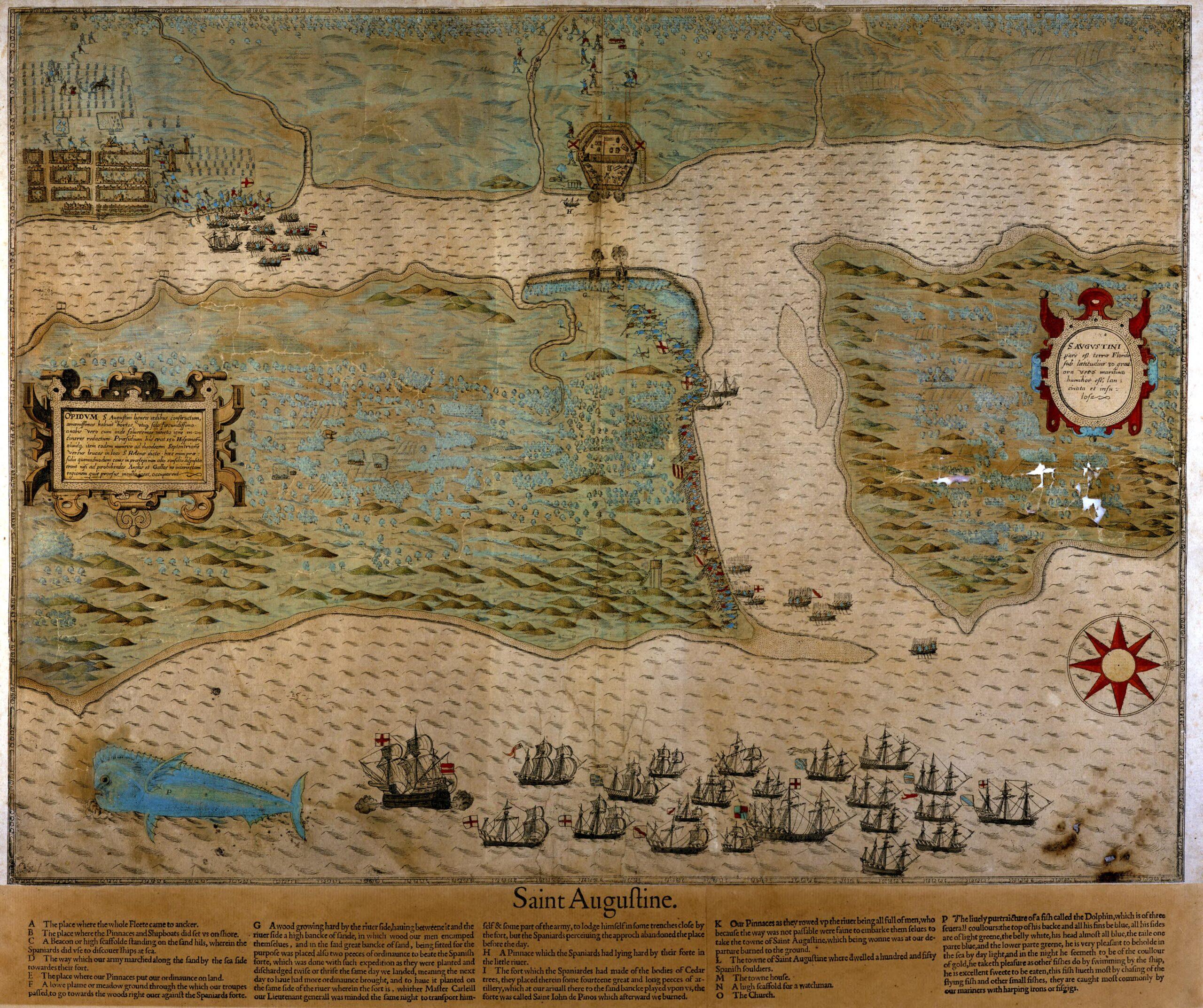
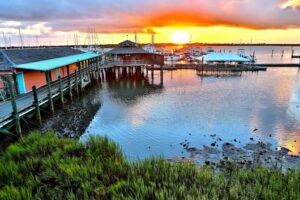
Dawn breaks over the Matanzas Inlet much as it did on September 8, 1565, when Pedro Menéndez de Avilés first spotted the harbor that would become St. Augustine. The Spanish commander had more than colonization on his mind – he was racing against time. French Huguenots under René de Laudonnière had already established Fort Caroline near present-day Jacksonville, and Spain couldn’t allow this Protestant foothold in their claimed territory. This wasn’t just about planting a flag; it was about establishing Spain’s northernmost military outpost in the New World.

The Founding Story
When Menéndez made landfall on September 8, 1565, he did so with military precision. Spanish documents tell us he arrived with 800 colonists, including soldiers, craftsmen, and farmers. The date was chosen deliberately – it was the feast day of St. Augustine of Hippo, for whom Menéndez would name the settlement. Father Francisco López de Mendoza Grajales celebrated the first Mass at what would become Mission Nombre de Dios, establishing both the spiritual and temporal claims to this new territory.
The location wasn’t chosen by chance. Archaeological evidence shows that Menéndez selected the site of an existing Timucuan village called Seloy. The high ground offered clear views of both the inlet and the mainland approach, while the harbor provided safe anchorage beyond the treacherous sandbar. This strategic positioning would prove crucial in the colony’s early survival.
First Months: A Story of Survival
Those first months tested every resource the Spanish possessed. Archaeological excavations at the original settlement site reveal how quickly the colonists had to adapt. Their first fort, a hasty wooden construction, protected them from both hostile natives and French reprisals. The archaeological record shows evidence of burned structures and hurried repairs, telling the story of those precarious early days.
Food became a critical concern almost immediately. Spanish supply ships struggled to cross the sandbar at the harbor entrance, a challenge that would plague the colony for its entire history. The colonists learned – sometimes through desperate trial and error – which local foods could supplement their dwindling Spanish provisions. Archaeological evidence shows a gradual shift from European to local food sources, with increasing amounts of shellfish and local game appearing in middens from this period.
Building the Colonial Capital: More Than Just Survival

The transition from military outpost to colonial capital happened gradually. While Spanish documents paint a picture of orderly development, archaeological evidence tells a more complex story. The first permanent structures were humble – palm-thatched huts built in the native style because European building techniques simply didn’t work in Florida’s challenging climate. Imagine being a proud Spanish soldier, used to stone fortresses and tile roofs, learning to build like the Timucuans because that’s what actually kept the rain out.
The heart of the colonial town took shape around what we now call the Plaza de la Constitución. Spanish records from 1580 describe it as “a place of arms,” meaning both a military parade ground and the center of civic life. Archaeological excavations have revealed layers of packed shell and earth, showing how colonists gradually raised and improved this space. Each layer tells a story – from military drills to market days to public executions.
Daily Life in Spanish St. Augustine
Life in colonial St. Augustine was far from the romantic vision many imagine. Archaeological evidence from household sites tells us exactly what people ate, what they wore, and how they lived. Spanish officers complained endlessly in their reports about the quality of their uniforms, which rotted in the Florida humidity. Soldiers’ pay often arrived months late, if at all, leading many to moonlight as farmers or craftsmen – much to their commanders’ disapproval.
The most surprising discoveries come from trash pits behind colonial homes. These middens reveal that despite official trade restrictions, St. Augustine’s residents got their hands on everything from Chinese porcelain to English tobacco pipes. They might have been Spain’s northernmost garrison, but they weren’t living in isolation.
The Church and Daily Life
While modern visitors focus on the military aspects of colonial St. Augustine, religion shaped daily life just as powerfully. The archaeological footprint of the first wooden church, discovered during utility work in 1987, shows how the Spanish adapted their traditional church architecture to Florida conditions. They learned to build lighter structures that could flex in hurricanes rather than rigid ones that would shatter.
When Cultures Collide: The Reality of Colonial St. Augustine
The Spanish vision of creating a purely Catholic, Spanish colony collided with reality from day one. Archaeological evidence from household sites tells an unexpected story of cultural blending. Native American pottery turns up in Spanish officers’ homes, while European glass beads appear in Timucuan village sites. What started as necessity – Spanish colonists needing native knowledge to survive – evolved into something more complex.
Marriage records from the parish church reveal another surprising truth about colonial life. Despite official policies promoting Spanish exclusivity, by the 1600s, marriages between Spanish soldiers and native women became increasingly common. These unions created family networks that helped the colony survive, though Spanish authorities often complained about them in official correspondence.
The Economy of Spanish St. Augustine
Life in the colony revolved around the situado – the annual royal subsidy that paid for everything from soldiers’ salaries to church supplies. When this money arrived late (which it often did), the colony had to get creative. Account books from the period show an intricate system of IOUs and credit arrangements that kept the colony functioning between paydays. Soldiers became part-time farmers, officers’ wives ran small businesses, and everyone seemed to have a side hustle.
The discovery of glass beads, British ceramics, and other prohibited goods in archaeological sites tells us about a thriving smuggling trade. While official Spanish policy restricted trade to Spanish vessels, reality proved more complex. St. Augustine’s residents found ways to trade with Native Americans, English settlers, and even pirates when necessary. One excavated storehouse revealed layers of British pottery carefully hidden beneath Spanish cargo – evidence of how residents balanced official restrictions with practical needs.
Life and Death in the Colony
Parish records and archaeological evidence give us intimate details about how people lived and died in colonial St. Augustine. Disease was a constant companion – yellow fever and malaria regularly swept through the population. Yet the colonists developed sophisticated medical practices combining Spanish, Native American, and African healing traditions. Excavations of the colonial hospital site revealed medicines from all three cultures.
Cemetery excavations tell equally fascinating stories. Burial practices show a mix of Spanish Catholic traditions with local adaptations. Shells placed in graves – a Native American practice – appear alongside Spanish religious medals. These small details reveal how people maintained their faith while adapting to life in the New World.
Defending the Colony: More Than Just the Castillo

Most visitors know about the Castillo de San Marcos, but St. Augustine’s defenses went far beyond those coquina walls. Archaeological surveys have revealed a complex system of earthen fortifications that once encircled the entire colonial city. The remains of these defensive lines tell stories of constant vigilance. Every able-bodied man in the colony had to serve guard duty, from wealthy merchants to humble craftsmen – a fact that didn’t always sit well with the colonial elite, judging by their complaints preserved in official correspondence.
The discovery of musket balls, broken sword pieces, and other military artifacts across the colonial city reveals how real the threat of attack was. In 1668, the English pirate Robert Searle proved just how vulnerable the wooden fortifications were when he sacked the city. The archaeological evidence of this attack is stark – a layer of burned debris and broken pottery marks this violent chapter in the city’s history. This attack, more than any other event, convinced Spain to fund the construction of the stone Castillo.
Building the Castillo: Engineering a Marvel
The construction of the Castillo de San Marcos wasn’t just a military project – it was a community endeavor that transformed St. Augustine. Payroll records from 1672 to 1695 show how the massive project employed nearly everyone in the colony at some point. Native American laborers quarried coquina stone from Anastasia Island, African workers (both enslaved and free) provided skilled labor, and Spanish engineers supervised the work.
Recent analysis of the Castillo’s construction reveals engineering sophistication that was centuries ahead of its time. The coquina stone, seemingly soft and unsuitable for fortification, actually proved ideal for absorbing cannon fire without shattering. The star-shaped design, with its precisely angled bastions, created interlocking fields of fire that made direct assault nearly impossible. Even the moat served multiple purposes – defense, drainage, and even a convenient source of fish for the garrison, according to soldiers’ accounts.

Life in a Garrison Town
The daily rhythm of military life shaped every aspect of colonial St. Augustine. Each morning began with drum calls echoing through the streets – a sound that would have been as familiar to residents as church bells. Archaeological evidence from military sites shows us exactly how soldiers lived: broken pottery reveals what they ate, discarded uniform buttons tell us what they wore, and gaming pieces found in barracks show how they passed their free time.
Behind the Walls: The Real Lives of Colonial Soldiers
Garrison life wasn’t all military drills and guard duty. Pay records tell us that a soldier’s salary barely covered basic necessities, forcing most to take on second jobs. Archaeological evidence from soldiers’ quarters reveals an unexpected picture of domestic life. Many married local women and raised families in small homes near the Castillo. Their household middens (trash deposits) tell stories of adaptation – Spanish olive jars repurposed as water containers, broken weapons refashioned into tools, and military rations supplemented with local fish and game.
The soldiers weren’t always the disciplined force their commanders wanted. Court martial records detail everything from minor infractions to serious crimes. One particularly colorful case from 1692 describes a soldier caught sleeping on guard duty who claimed he’d been hypnotized by a “suspicious owl” – though his empty wine bottle probably had more to do with it. These records humanize the garrison, showing us real people struggling with the challenges of frontier life.
Trade and Commerce St. Augustine’s Spanish Colonial Period
While officially restricted to trading with Spanish ships, St. Augustine’s residents proved remarkably resourceful. Archaeological evidence shows an extensive trade network that officially wasn’t supposed to exist. Chinese porcelain, English pipes, French wine bottles, and Native American pottery all turned up in colonial homes. These forbidden goods tell us about a thriving underground economy that helped the colony survive when official supply ships ran late – which they usually did.
The discovery of merchant account books from the 1750s reveals how complex this unofficial economy became. Spanish merchants developed elaborate codes in their bookkeeping to disguise trades with English colonists from South Carolina. One clever merchant recorded British goods as “gifts from heaven” in his ledger – though Spanish authorities eventually caught on to this divine intervention.
The Social Fabric of Colonial Life
Parish records reveal a society far more diverse and dynamic than official Spanish policy intended. Marriage records, birth certificates, and death notices show us families connecting across racial and cultural boundaries. Spanish soldiers married Native American women, creating complex kinship networks that helped the colony survive. Free Black residents built successful businesses and owned property, their deeds and tax records preserved in colonial archives.
When Cultures Mix: The Real St. Augustine Society
Religious records reveal an aspect of colonial life that Spanish authorities rarely acknowledged in official reports – the emergence of a truly multicultural society. While Spanish law demanded Catholic orthodoxy, household shrines excavated from colonial homes tell a different story. Archaeological findings show traditional Native American ceremonial objects placed alongside Catholic saints, and African religious symbols incorporated into household decorations. One remarkable house site from the 1730s contained a room with both a Catholic altar and Timucuan ceremonial objects, suggesting the family maintained both traditions.
These cultural connections extended into every aspect of daily life. Local cookware found in colonial kitchens shows how Native American and African cooking techniques influenced Spanish cuisine. Traditional Spanish olive jars were modified to cook local foods, while native palmetto fiber baskets were adapted for Spanish storage needs. Even the architecture evolved – Spanish homes began incorporating native building techniques better suited to Florida’s climate.
The Women Who Built St. Augustine
While official histories focus on soldiers and governors, documents from the period reveal the crucial role of women in colonial survival. Property records show widows running businesses, managing estates, and even financing construction projects. María de los Reyes Suárez, a merchant’s widow, owned multiple properties along St. George Street in the 1750s, her success documented in tax records and business licenses.
Women also maintained crucial diplomatic connections with native communities. Marriage records and baptismal certificates show how Spanish-Native American marriages created networks of kinship that helped the colony negotiate peace treaties and trade agreements. These relationships proved especially valuable during times of war or shortage.
A Port City’s Story
Despite its reputation as a military outpost, St. Augustine was fundamentally a port city. Harbor records detail a constant flow of ships bringing supplies, carrying messages, and – sometimes – smuggling goods. The discovery of shipping manifests from the 1740s reveals how captains would officially declare their cargoes in St. Augustine’s port, then quietly conduct additional trade along the coast.
Archaeological evidence from the waterfront shows the scale of maritime activity. Excavations have uncovered imported goods from across the Spanish empire: pottery from Mexico, silver from Peru, and textiles from the Philippines. These findings prove that despite its remote location, St. Augustine remained connected to global trade networks.
Legacy in Stone and Shell: How Colonial St. Augustine Shaped Modern Florida
The Spanish colonial period’s influence extends far beyond the coquina walls still standing today. Every aspect of modern St. Augustine bears its colonial imprint, from the narrow streets that frustrate modern traffic to the distinctive architectural style that defines Florida’s identity. Archaeological work continues to reveal how deeply this colonial heritage runs – quite literally – beneath our feet.
Recent discoveries during utility work along Charlotte Street uncovered original colonial road surfaces, showing how today’s street pattern follows paths worn by Spanish soldiers’ boots centuries ago. These colonial-era roads weren’t placed randomly; they were carefully designed to catch sea breezes and provide shade during Florida’s brutal summer heat. Modern climate studies have confirmed that this colonial street layout still helps moderate downtown temperatures today.
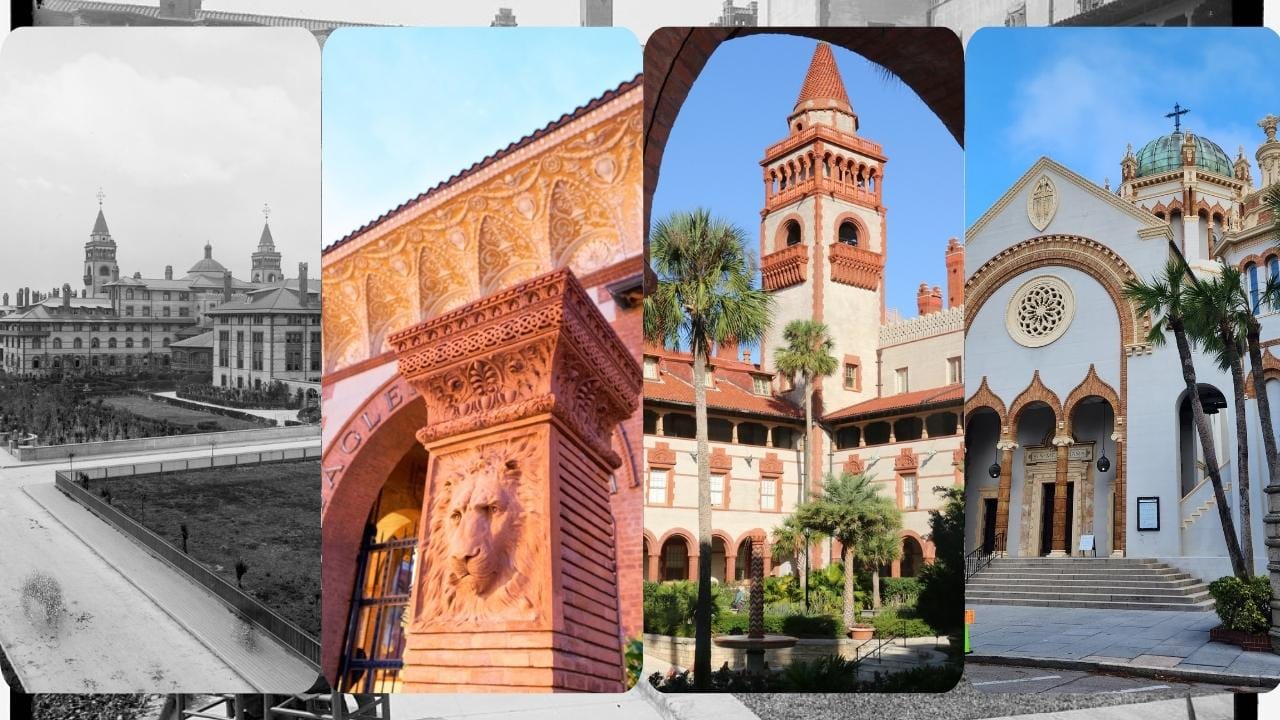
The success of St. Augustine’s preservation owes much to decisions made during the colonial period. The Spanish practice of building in stone and coquina, though expensive at the time, meant that colonial structures could survive centuries of hurricanes, development, and change. When Henry Flagler arrived in the 1880s, he found a city whose colonial architecture could be restored rather than replaced – a crucial difference that helped preserve St. Augustine’s unique character.
But perhaps the most enduring colonial legacy isn’t in the buildings or streets but in the city’s multicultural character. Just as colonial St. Augustine thrived through cultural mixing and adaptation, today’s city continues to blend influences from many traditions. Modern archaeological work shows this pattern stretching back unbroken to the earliest colonial days, proving that diversity and adaptation were always key to St. Augustine’s survival.
Walking through St. Augustine today, every step tells a story from this colonial past. From the precise angles of the Castillo’s walls to the worn coquina steps of colonial homes, from the plaza that still serves as the city’s heart to the narrow streets that still catch cooling breezes, the Spanish colonial period lives on in more than just museum exhibits. It continues to shape how people live, work, and gather in America’s oldest city.
A Living Colonial Legacy

Today’s visitors often stand at the City Gates, looking down St. George Street, and feel a connection to those colonial times that’s hard to explain. Maybe it’s the coquina walls still warm from the sun, or the narrow streets funneling cool breezes just as they did in colonial times. While this glimpse into Spanish colonial St. Augustine reveals the foundation of America’s oldest city, it’s just the beginning of an even more fascinating story.
As St. Augustine grew beyond its colonial borders, each new era would add its own chapter to the city’s unique story. The British period would bring new architectural influences, and the Minorcans would add their own distinctive cultural flavor. By the time Henry Flagler arrived in the 1880s to transform the ancient Spanish colonial town into America’s premier winter resort, St. Augustine had already proven its remarkable ability to adapt while preserving its essential character.
Discover more about St. Augustine’s extraordinary journey through time in our upcoming articles about the Castillo de San Marcos, Henry Flagler’s transformation of the city, and the unique architectural heritage that makes St. Augustine unlike any other American city. For an even deeper dive into this fascinating history, download our comprehensive guide, “St. Augustine: A Living History,” and experience America’s oldest city through a fresh perspective.