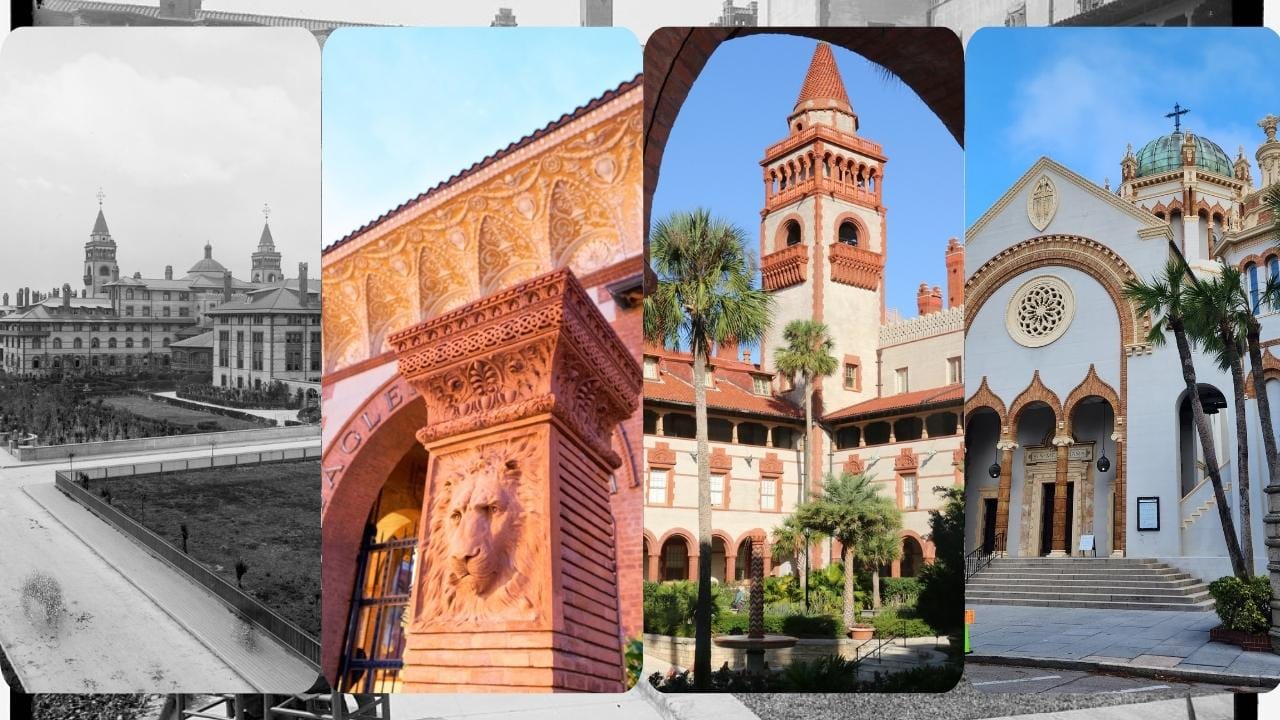
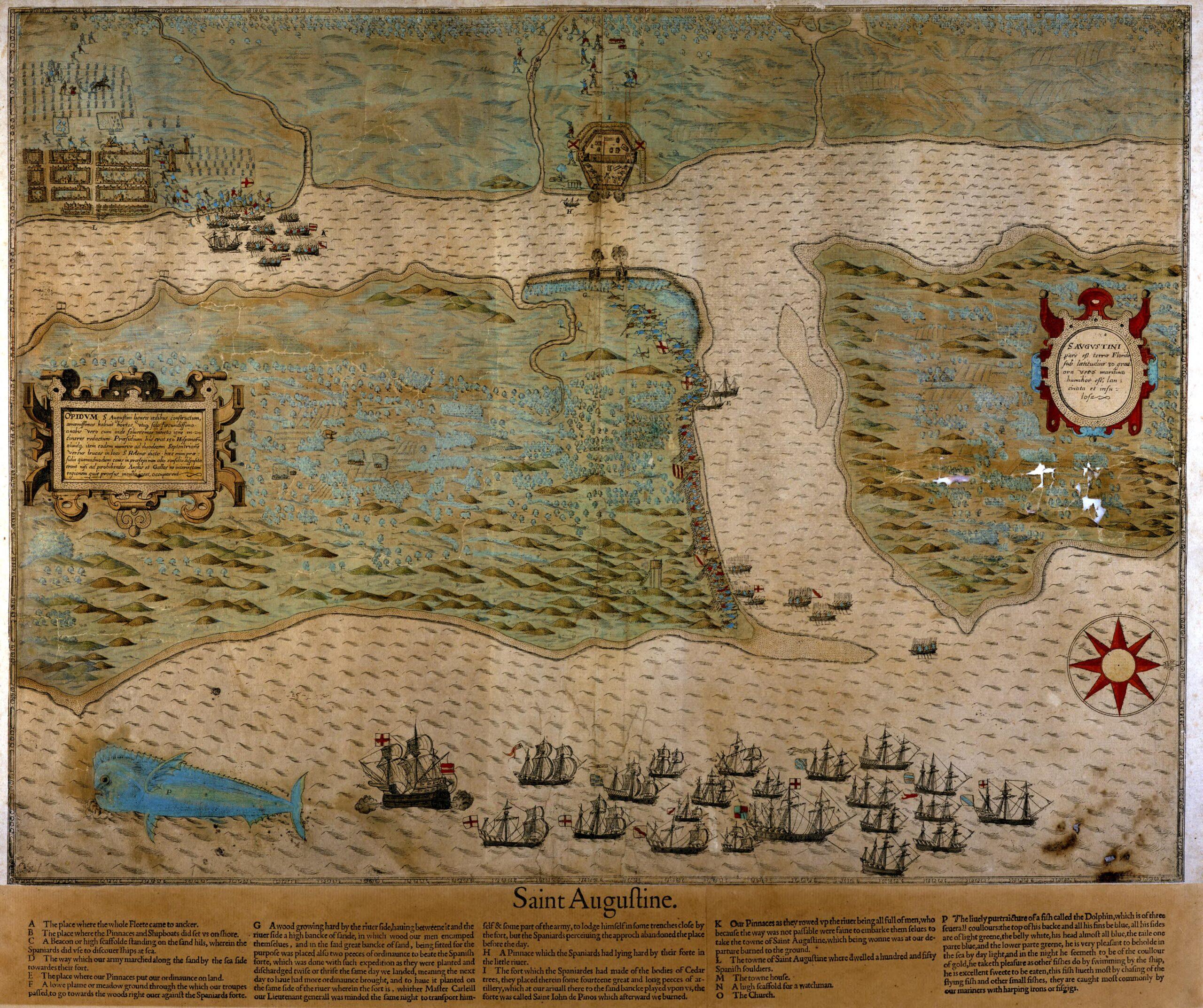
Standing at the heart of America’s oldest city, St. Augustine’s historic churches tell stories spanning nearly half a millennium. Each sacred space represents not just architectural achievement, but the enduring spirit of faith that helped shape the New World.
Mission Nombre de Dios: America’s First Parish

The First Parish in America
On September 8, 1565, Pedro Menéndez de Avilés knelt on the shores of Florida as Father Francisco López de Mendoza Grajales celebrated the first parish Mass in what would become the United States. The location, carefully documented in Spanish records, marked the beginning of permanent Christian worship in North America. That simple ceremony, attended by Spanish soldiers and native Timucuans, initiated a religious tradition that continues unbroken to the present day.
Archaeological Discoveries
Recent archaeological excavations at Mission Nombre de Dios have revealed the evolution of this sacred site. The earliest structures were simple wooden buildings, their post holes still visible in careful excavations. As the colony grew, more permanent structures appeared. Archaeologists have uncovered the foundations of successive chapels, each larger than its predecessor, telling the story of a growing and prospering religious community.
Artifacts recovered from the site paint a vivid picture of colonial religious life. Spanish religious medals mingle with native American shell beads in the soil, while fragments of colonial rosaries lie near traditional Timucuan pottery. These discoveries demonstrate how European and native American traditions merged in early colonial Florida.
The Great Cross: Monument to Faith
Rising 208 feet above the mission grounds, the Great Cross stands as one of Florida’s most distinctive landmarks. Constructed in 1965 to commemorate St. Augustine’s 400th anniversary, this massive monument contains 70 tons of stainless steel anchored to bedrock 28 feet below ground.
The cross’s engineering tells its own story of innovation. Designers studied both modern wind dynamics and colonial building techniques to create a structure that could withstand Florida’s hurricanes. Like the colonial buildings that have endured centuries of storms, the cross is designed to flex slightly in high winds, dispersing the force that would snap more rigid structures.
Shrine of Our Lady of La Leche
The Shrine of Our Lady of La Leche represents one of North America’s oldest centers of Marian devotion. The current chapel, reconstructed in 1915 and extensively renovated in 2020, continues a devotional tradition dating to St. Augustine’s earliest days. Archaeological evidence confirms the location of earlier shrines on this site, with artifacts from the 1600s documenting centuries of continuous worship.
The shrine’s architecture demonstrates how colonial builders adapted European designs to Florida’s climate. Thick walls moderate temperature extremes, while carefully positioned windows capture cooling breezes. Recent renovations preserved these historical features while adding modern protections against Florida’s harsh environment.
The Sacred Ground
The mission grounds themselves tell stories of faith, conflict, and perseverance. Native shell middens beneath colonial structures reveal the site’s pre-Christian history. Military artifacts recall the mission’s role during periods of conflict, while everyday objects – buttons, coins, pottery fragments – document daily life in colonial America’s first parish.
Today, Mission Nombre de Dios continues its centuries-old tradition of worship while preserving the physical remains of America’s earliest Christian community. From the Great Cross to the humble archaeological remains of its first wooden church, from the renovated shrine to the ancient cemetery, this sacred ground connects modern visitors with the very beginnings of Christian worship in North America.
Cathedral Basilica: Florida’s Oldest Catholic Church

A Phoenix Rising: The Cathedral’s Origins
When fire swept through St. Augustine in December 1788, it destroyed the wooden church that had served as the city’s spiritual center. Yet from these ashes rose something remarkable – the magnificent stone Cathedral we see today. Construction began in 1793, creating not just a church but a symbol of Spanish determination to maintain their northernmost colonial capital.
Building an Architectural Legacy
Construction of the current Cathedral, completed in 1797, represented both architectural ambition and practical engineering. Its builders chose coquina stone from local quarries, the same material that had proven its worth in the Castillo de San Marcos. The massive stone walls, rising 40 feet high, were designed to withstand both storms and potential attacks.
The Cathedral’s façade demonstrates classic Spanish Colonial architecture adapted to Florida conditions. Its bell tower, rising above the Plaza de la Constitución, housed bronze bells cast in Spain. The ornate niche above the main entrance originally held a statue of St. Augustine, establishing the church’s identity as a distinctly Spanish Catholic institution in the New World.
Changes Through Time
The British Period (1763-1783)
During twenty years of British rule, the previous wooden church served as an Anglican place of worship. Archaeological evidence shows how British occupants modified the interior to suit Protestant services while maintaining the building’s basic structure. These alterations provide fascinating insights into how religious spaces adapted to political changes in colonial America.
Return to Catholic Worship
When Spain regained control in 1783, Catholic services resumed in the wooden church until its destruction by fire. The new Cathedral, built under Governor Juan Nepomuceno de Quesada, represented Spain’s renewed commitment to their Florida colony. Its grand scale and solid construction declared that this time, Spain intended to stay.
Archaeological Discoveries
Recent archaeological investigations beneath the Cathedral have revealed fascinating layers of history. Excavations uncovered foundations of earlier churches dating back to the 1500s, including postholes from the original wooden church and remnants of successive buildings. These discoveries help document how St. Augustine’s religious center evolved from humble beginnings to the grand Cathedral we see today.
The Victorian Transformation: 1887
The Cathedral underwent its most dramatic transformation in 1887, when architect James Renwick Jr. (famous for designing St. Patrick’s Cathedral in New York) oversaw an extensive renovation. This project added the distinctive Spanish Renaissance Revival façade we see today, while carefully preserving the original colonial structure behind it. The renovation introduced stained glass windows, extended the sanctuary, and added the striking bell tower that dominates the Plaza.
Sacred Interior: Art and Architecture
The Cathedral’s interior tells its own story of artistic evolution. The ceiling’s exposed beams, following Spanish colonial tradition, create superior acoustics while allowing the structure to flex during storms. The marble altar, installed during the 1887 renovation, combines European craftsmanship with American materials.
Artistic Treasures
- The murals depicting St. Augustine’s religious history, added in 1909
- The original tabernacle, brought from Spain in 1798
- The hand-carved stations of the cross, dating from the late 1800s
- Stained glass windows crafted in Munich, Germany
Religious Artifacts and Colonial Heritage
The Cathedral houses a collection of religious artifacts spanning four centuries of Catholic worship in St. Augustine. The oldest items include:
- A bronze bell cast in Spain in 1682
- A silver chalice used during Spanish colonial period
- Religious statues brought from Cuba during the Second Spanish Period
- Original baptismal records dating to the 1590s
Modern Role in America’s Oldest City
Today, the Cathedral Basilica continues its centuries-old mission while adapting to modern needs. Designated a National Historic Landmark in 1970, it serves both as an active parish church and a vital link to St. Augustine’s colonial past. The building demonstrates how careful preservation can maintain historical authenticity while meeting contemporary needs.
Preservation Challenges
Recent preservation efforts have focused on protecting this historic structure from modern threats. Climate change and rising sea levels pose new challenges to a building that has already survived centuries of storms. Conservators use cutting-edge technology to monitor structural stability while maintaining the Cathedral’s historical integrity.
Memorial Presbyterian: Flagler’s Marble Masterpiece
A Father’s Memorial
In 1889, Henry Flagler commissioned one of America’s most distinctive churches to honor his daughter Jenny Louise Benedict, who died in childbirth that same year. No expense was spared in creating this Venetian Renaissance masterpiece, which introduced architectural elements never before seen in North America.
The Venetian Vision
Architects John Carrère and Thomas Hastings, fresh from their triumph with the Ponce de Leon Hotel, created a scaled version of Venice’s St. Mark’s Basilica. The church’s copper dome, rising 150 feet above Valencia Street, transforms the St. Augustine skyline with its distinctive silhouette.
Engineering Innovation
The church’s construction combined traditional craftsmanship with cutting-edge technology:
- The dome’s innovative support system distributes weight through a series of arches
- A sophisticated ventilation system, still functioning today, manages Florida humidity
- The foundation system, designed specifically for Florida’s sandy soil, has kept the massive structure stable for over 130 years
Interior Splendor
The church’s interior showcases the finest materials and craftsmanship of the Gilded Age:
- Hand-carved Italian marble throughout the sanctuary
- Tiffany stained glass windows designed to withstand hurricane-force winds
- Carved wooden pews made from carefully selected mahogany
- A pipe organ built by the renowned Roosevelt Organ Works of New York
Sacred Details
The church’s intricate details reveal both artistic excellence and deep symbolism:
- The terra cotta frieze surrounding the building tells biblical stories
- Each ceiling boss depicts a different flower mentioned in the Bible
- The marble floor pattern guides worshippers toward the altar
- Acoustical engineering creates perfect conditions for both spoken word and music
Flagler’s Vision and Social Impact
More than just a memorial, Memorial Presbyterian Church represented Flagler’s broader vision for St. Augustine. Built simultaneously with his grand hotels, the church demonstrated how religious architecture could match the splendor of secular buildings. Its location, carefully chosen near the Ponce de Leon Hotel, made it easily accessible to wealthy winter visitors while remaining open to the entire community.
Society and Sacred Space
During the Gilded Age, the church became a center of both religious and social life. Winter visitors from America’s wealthiest families attended services alongside year-round residents. The guest books from this period read like a Who’s Who of American society, including names like Vanderbilt, Carnegie, and Rockefeller.
Preservation Through Time
The church’s preservation history demonstrates both challenges and triumphs:
- 1950s: Major restoration of the copper dome
- 1976: Listed on the National Register of Historic Places
- 1998-2000: Comprehensive restoration of stained glass windows
- 2016-2018: Multi-million dollar dome restoration using original techniques
Modern Engineering Meets Historical Accuracy
Recent preservation work has revealed the sophistication of the original construction. When restoring the dome in 2016, engineers discovered that 19th-century builders had incorporated flexible joints that allowed the structure to move slightly during temperature changes – a feature modern architects still admire.
Sacred Legacy
Today, Memorial Presbyterian Church stands as more than just a magnificent building. It represents:
- The height of American Gilded Age architecture
- Florida’s unique interpretation of Venetian design
- The evolution of church engineering for tropical climates
- A father’s enduring memorial to his daughter
Grace United Methodist: The Gothic Glory of St. Augustine’s Historic Churches

Henry Flagler’s Other Church
While Memorial Presbyterian Church reflected Venetian splendor, Grace United Methodist Church demonstrated Flagler’s versatility in religious architecture. Built in 1887, the church was part of Flagler’s comprehensive vision for St. Augustine. Though Methodist himself, Flagler commissioned Carrère and Hastings to create a distinctly different architectural statement from his Memorial Presbyterian Church.
Adapting Gothic to the Tropics
Unlike traditional Gothic churches built for northern climates, Grace Methodist incorporated unique features for Florida’s environment:
- Tall, narrow windows designed to capture sea breezes
- Local coquina and red brick construction combining beauty with durability
- A ventilation system that used the tower’s height to create natural air circulation
- Strategic placement of buttresses that provided both support and shade
Distinctive Design Elements
The church showcases remarkable architectural features:
- The 100-foot bell tower, which doubles as a ventilation chimney
- Hand-carved wood details throughout the interior
- Original stained glass windows with specially engineered supports for hurricane resistance
- Unique acoustic properties created by the vaulted ceiling design
Construction and Materials
The church’s construction in 1887 marked several innovations:
- First use of structural steel in a St. Augustine church
- Combination of traditional brick masonry with modern engineering
- Integration of fire-resistant materials while maintaining Gothic aesthetics
- Creation of a basement level, unusual for Florida construction
Sacred Space Through Time
Grace Methodist’s role in St. Augustine evolved alongside the city itself. During the Gilded Age, the church served both year-round residents and Northern visitors, creating a unique blend of local and resort congregation. The basement Sunday School rooms, innovative for their time, hosted community events and education programs that helped bridge social divides in the growing city.
Community Cornerstone
The church’s location near Flagler’s hotels proved strategic. While winter visitors filled its pews during tourist season, Grace Methodist maintained strong local connections throughout the year. Records show how the congregation adapted to this dual role:
- Summer services focused on local families
- Winter programs expanded to accommodate visitors
- Year-round missions served the broader community
- Special events brought together permanent and seasonal residents
Architectural Influence
Grace Methodist’s successful adaptation of Gothic architecture to Florida’s climate influenced church design throughout the state. Its innovative features became models for other congregations:
- Natural ventilation systems
- Hurricane-resistant construction techniques
- Integration of traditional and modern materials
- Space planning for both worship and community use
Preservation Challenges and Triumphs
Modern preservation efforts face unique challenges:
- Maintaining the original ventilation system while adding modern climate control
- Preserving historic brick and coquina in Florida’s harsh environment
- Protecting stained glass from increasingly severe storms
- Balancing historical authenticity with contemporary needs
Recent restoration projects have revealed the builders’ sophistication. Original construction documents show how carefully engineers planned for Florida’s climate challenges, creating solutions that remain effective today.
Ancient City Baptist: Victorian Faith

A Growing City’s New Church
Built in 1895 as St. Augustine expanded beyond its colonial boundaries, Ancient City Baptist Church represents the city’s evolution from Spanish Catholic town to diverse American city. Its construction marked a significant moment: the establishment of the first permanent Baptist congregation in America’s oldest city.
Victorian Architecture Meets Southern Tradition
Distinctive Design Elements
Unlike the grand stone churches Flagler commissioned, Ancient City Baptist exemplifies traditional Victorian church architecture adapted for Southern needs:
- Soaring wooden spire visible across the colonial city
- Steep roof design that sheds Florida’s heavy rains
- Large windows placed to maximize natural ventilation
- Wrapped porch providing shade and gathering space
Construction Innovation
The church’s wooden construction demonstrates sophisticated engineering:
- Heart pine timbers selected for resistance to decay
- Unique foundation system adapted for St. Augustine’s sandy soil
- Interior supports designed to create an open sanctuary
- Roof trusses engineered for hurricane resistance
Architectural Details
The church’s design reflects both Baptist traditions and local adaptations:
- Central baptistery built to accommodate full immersion
- Curved pew arrangement typical of Victorian Baptist churches
- Raised pulpit platform with exceptional acoustics
- Original stained glass windows telling biblical stories
Sacred Community: Growth and Change
Ancient City Baptist played a crucial role in St. Augustine’s religious diversification. As the city grew beyond its Catholic and Episcopal roots, the Baptist congregation represented a new era of religious freedom. Church records show how the congregation grew from a small group meeting in homes to building this impressive structure.
A Growing Congregation
The church’s construction in 1895 came at a pivotal moment:
- St. Augustine’s population was expanding north of the colonial city
- Tourism brought increased religious diversity
- The Baptist community had outgrown temporary meeting spaces
- Local families sought a permanent home for their faith
Preservation and Adaptation
Time has proven the wisdom of the original builders. The church has withstood more than a century of hurricanes, demonstrating the effectiveness of its Victorian engineering:
- Original heart pine structure remains solid
- Ventilation system still functions effectively
- Stained glass windows have survived countless storms
- Acoustics continue to serve modern worship
Modern Challenges
Recent preservation efforts focus on maintaining both historical authenticity and modern functionality:
- Climate control integration respecting original architecture
- Wood preservation in Florida’s humid environment
- Hurricane protection for historic windows
- Accessibility improvements maintaining Victorian character
Legacy of Faith
Today, Ancient City Baptist stands as testament to St. Augustine’s religious diversity and architectural heritage:
- One of Florida’s finest examples of Victorian church architecture
- Living history of Baptist growth in the nation’s oldest city
- Symbol of religious freedom in former Spanish colony
- Active congregation maintaining historical traditions
Trinity Episcopal: Florida’s Oldest Protestant Church

Breaking New Ground
Established in 1821, immediately following Florida’s transfer to the United States, Trinity Episcopal Parish represents a pivotal moment in religious history. As the first Protestant church in former Spanish territory, its founding marked the end of centuries of exclusive Catholic worship in St. Augustine.
Colonial Transitions
The original Trinity Church, built in 1831, occupied a unique position in St. Augustine’s architectural history:
- First Protestant church constructed in Florida
- Built using traditional coquina stone
- Designed to complement colonial architecture
- Located near the Plaza de la Constitución
Early American Innovation
The church’s construction combined colonial materials with American design:
- Traditional coquina walls
- New England-style church layout
- American Federal architectural elements
- Innovative ventilation systems
Current Structure and Evolution
The present Trinity Episcopal Church, completed in 1834, stands as Florida’s oldest Protestant church building:
- Original coquina walls remain
- English Gothic Revival elements added during Victorian era
- Historic cemetery surrounds the church
- Interior modifications reflect changing worship styles
Civil War Period
Trinity played a significant role during the Civil War:
- Served as hospital during Union occupation
- Protected by federal troops
- Maintained services for both sides
- Preserved valuable church records
Architectural Evolution Through Time
Trinity Episcopal’s structure tells the story of American architectural evolution in microcosm. The original coquina walls, built in colonial style, gained Victorian Gothic elements during later renovations. Each modification reflected both changing tastes and practical needs:
- 1840s: Addition of Gothic Revival windows
- 1870s: Bell tower construction
- 1890s: Interior redesign incorporating Anglo-Catholic influences
- Early 1900s: Installation of memorial stained glass windows
Sacred Engineering
The church’s adaptations demonstrate remarkable engineering foresight:
- Original foundation system still manages Florida’s high water table
- Victorian-era ventilation improvements remain functional
- Bell tower designed to flex during storms
- Historic windows retrofitted for hurricane protection
Historic Cemetery
Trinity’s surrounding cemetery provides a unique window into St. Augustine’s past. Gravestones dating from the 1830s onward tell stories of:
- Early Protestant settlers
- Military personnel from multiple conflicts
- Prominent local families
- Yellow fever epidemic victims
- Civil War soldiers from both sides
Archaeological Significance
Recent archaeological surveys have revealed:
- Earlier burial patterns
- Evolution of funeral customs
- Changes in monument styles
- Evidence of earlier structures
Notable Historical Events
Trinity’s records document pivotal moments in St. Augustine’s history:
- First Protestant wedding in Florida (1832)
- Services during three yellow fever epidemics
- Union occupation during Civil War
- Gilded Age social gatherings
- Major hurricanes and preservation efforts
Modern Preservation and Contemporary Role
Today, Trinity Episcopal Parish balances its historic significance with active ministry. Recent preservation efforts focus on maintaining the building’s integrity while adapting to modern needs:
- Advanced climate control systems hidden within historic walls
- Original coquina surfaces cleaned and preserved
- Historic windows reinforced while maintaining authenticity
- Cemetery preservation and documentation ongoing
Living History
As Florida’s oldest Protestant church, Trinity continues to serve both its congregation and the broader community:
- Regular worship services in historic setting
- Educational programs about religious history
- Guided historical tours
- Community outreach programs
- Special events connecting past and present
Trinity Episcopal Parish stands as more than just Florida’s oldest Protestant church. It represents the evolution of religious freedom in Spanish Florida, the adaptation of northern church architecture to southern conditions, and the endurance of faith through centuries of change. From its coquina walls to its historic cemetery, from its Victorian modifications to its modern preservation efforts, Trinity embodies St. Augustine’s remarkable journey from Spanish Catholic colony to diverse American city.
Want to discover more about St. Augustine’s sacred spaces and architectural heritage? Explore our detailed guide, “St. Augustine: A Living History,” and learn how America’s oldest city preserved its religious traditions while embracing change through the centuries.
Sacred Legacies: A Living Heritage
Walking St. Augustine’s streets today, these historic churches do more than mark the skyline – they tell the story of America’s religious evolution in stone, wood, and stained glass. From the Mission Nombre de Dios where European Christianity first took root in North America, to the Cathedral Basilica’s Spanish colonial grandeur, from Flagler’s marble monument to Victorian adaptive architecture, each sacred space adds a unique chapter to our nation’s religious history.
These buildings represent more than just places of worship. They demonstrate how different faiths and cultures adapted to Florida’s challenging environment, how architectural styles evolved to meet local needs, and how successive generations preserved their religious heritage while embracing change. The stories of these churches – their construction, preservation, and continuing service – mirror the larger story of St. Augustine itself.
Today, these historic churches continue their centuries-old missions while facing modern challenges. Their preservation teaches valuable lessons about building resilience, adapting to change, and maintaining living connections to our past. As St. Augustine moves into its fifth century, these sacred spaces remain vital links between our colonial heritage and contemporary life, proving that the oldest city’s religious traditions remain as relevant today as when the first Mass was celebrated on its shores in 1565.
Discover more about St. Augustine’s extraordinary heritage in our articles about the Spanish Colonial Period, the architectural evolution of America’s oldest city, and the Flagler Era that transformed it. For an even deeper understanding of how these sacred spaces fit into St. Augustine’s broader historical tapestry, download our comprehensive guide, “St. Augustine: A Living History.”
Whether you’re interested in colonial architecture, religious history, or the preservation of America’s oldest city, understanding these sacred spaces helps unlock the story of how St. Augustine maintained its spiritual heritage while embracing nearly half a millennium of change.